
What’s the Difference Between Goth and Emo?
Jan 9, 2026973 words5 min read

At first glance, goth and emo can look almost identical. Both styles favor dark clothing, dramatic aesthetics, and music with emotional depth. To someone outside alternative culture, the difference may seem purely cosmetic — black clothes, eyeliner, and intense moods.
But goth and emo are not interchangeable. They come from different musical roots, express emotion in very different ways, and represent distinct subcultures with their own histories, values, and visual languages.
If you’ve ever wondered where the line between goth and emo truly lies, this guide breaks it down clearly — without stereotypes.
Date your Darkness
Join thousands of goth singles on DarkHeart. Download the app and start connecting with people who share your dark aesthetic.



Understanding Goth Culture
Goth emerged as a subculture in the late 1970s and early 1980s, growing out of post-punk music scenes in the UK. It wasn’t just about clothing — it was deeply tied to music, art, literature, and atmosphere.
At its core, goth culture embraces darkness not as negativity, but as beauty, mystery, and depth. Goth music often explores themes like melancholy, romance, existentialism, and the supernatural. The sound is typically moody, atmospheric, and introspective rather than aggressive.
Visually, goth style leans toward black clothing, dramatic silhouettes, lace, velvet, leather, and historical influences. Many goths draw inspiration from Victorian mourning fashion, medieval imagery, or occult symbolism. The aesthetic is intentional, expressive, and often theatrical.
Importantly, goth is not a trend — it has endured for decades and continues to evolve while remaining rooted in its origins.
What Defines Emo?
Emo is short for “emotional hardcore,” a term that originally described a subgenre of punk music in the mid-1980s. However, what most people recognize as emo today refers to the early-2000s cultural movement tied to alternative rock and pop-punk bands.
Emo music is deeply personal. Lyrics focus on heartbreak, vulnerability, insecurity, and emotional struggle. The emphasis is not atmosphere, but confession — expressing feelings openly, sometimes painfully.
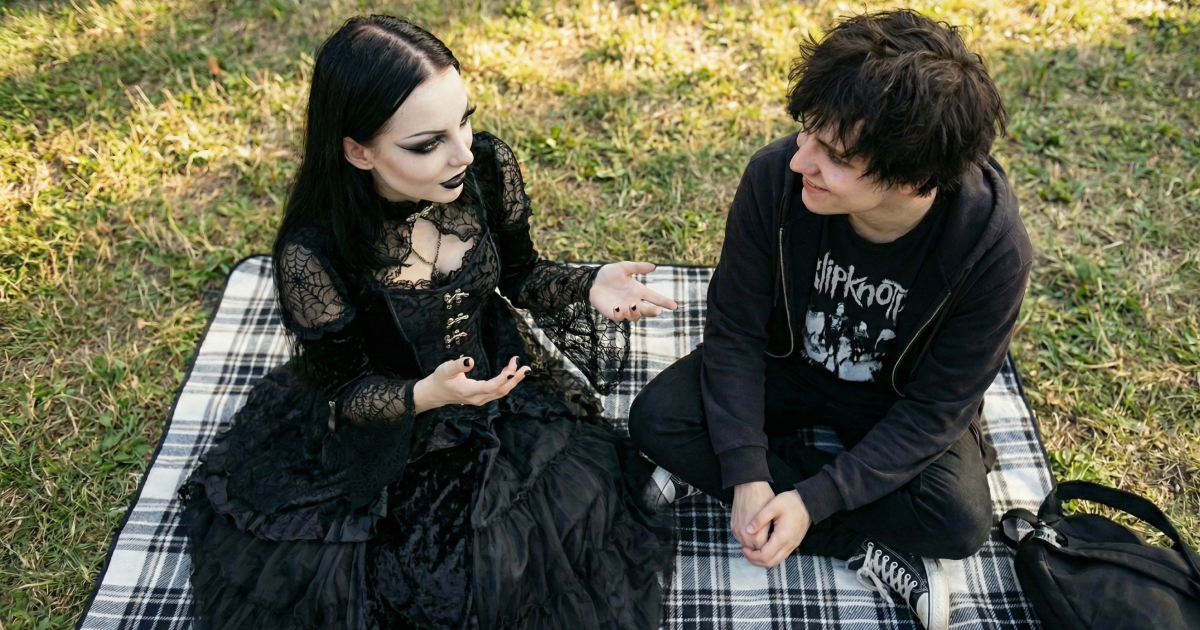
The emo aesthetic reflects this emotional rawness. Clothing often includes skinny jeans, band t-shirts, hoodies, studded belts, and sneakers. While dark colors are common, emos are more likely than goths to incorporate bright accents, graphic designs, or playful details.
Unlike goth, emo culture had a relatively short mainstream lifespan, peaking in the early to mid-2000s. While it still exists today, it doesn’t have the same ongoing subcultural infrastructure or evolution as goth.
Music: Atmosphere vs. Emotion
Music is the clearest dividing line between goth and emo.
Goth music focuses on mood and texture. It creates a feeling — haunting, romantic, or eerie — and often feels detached or poetic. The vocals may sound distant or dramatic, reinforcing the atmospheric quality.
Emo music is direct and emotional. Lyrics are often written in first person, describing personal pain, relationships, and inner conflict. The sound is more energetic and closely related to punk and alternative rock.
In short:
- Goth music creates an environment
- Emo music tells a personal story
Clothing and Style Differences
Although both styles use dark clothing, the intention behind the look differs.
Goth fashion is curated and symbolic. Outfits are often layered, detailed, and influenced by history, fantasy, or gothic art. Accessories may include crosses, lace gloves, chokers, boots, or dramatic makeup. Even minimal goth looks tend to feel deliberate and expressive.
Emo fashion is more casual and youth-driven. Skinny jeans, band tees, hoodies, striped tops, and studded accessories are common. The look often feels spontaneous rather than theatrical, reflecting emotional authenticity rather than visual storytelling.
Subcultures and Variety
One of the biggest differences between goth and emo is subculture depth.
Goth has many recognized substyles, each with its own aesthetic focus. Some goths lean heavily into romantic or Victorian influences, while others prefer futuristic, minimal, or pastel interpretations. Despite these variations, all goth substyles share a connection to goth music and atmosphere.
Emo, on the other hand, does not have clearly defined subcultures. The style is relatively uniform, centered around a specific era and musical movement.
Makeup and Visual Expression
Makeup is another area where the contrast becomes obvious.
Goth makeup often extends beyond the eyes. Dark lipstick, pale foundation, dramatic contouring, and bold color contrasts are common. The goal is transformation — creating a striking, sometimes otherworldly appearance.
Emo makeup is more restrained. Heavy eyeliner is central, but the rest of the face is usually left natural.
Hair as Identity
Hair plays a symbolic role in both styles.
Goth hairstyles tend to be symmetrical, long, and dark, though they vary widely depending on substyle. Hair is often treated as part of an overall silhouette rather than a statement on its own.
Emo hair is instantly recognizable: side-swept bangs, asymmetrical cuts, heavy layers, and teased volume. Bright streaks or contrasting highlights are common.
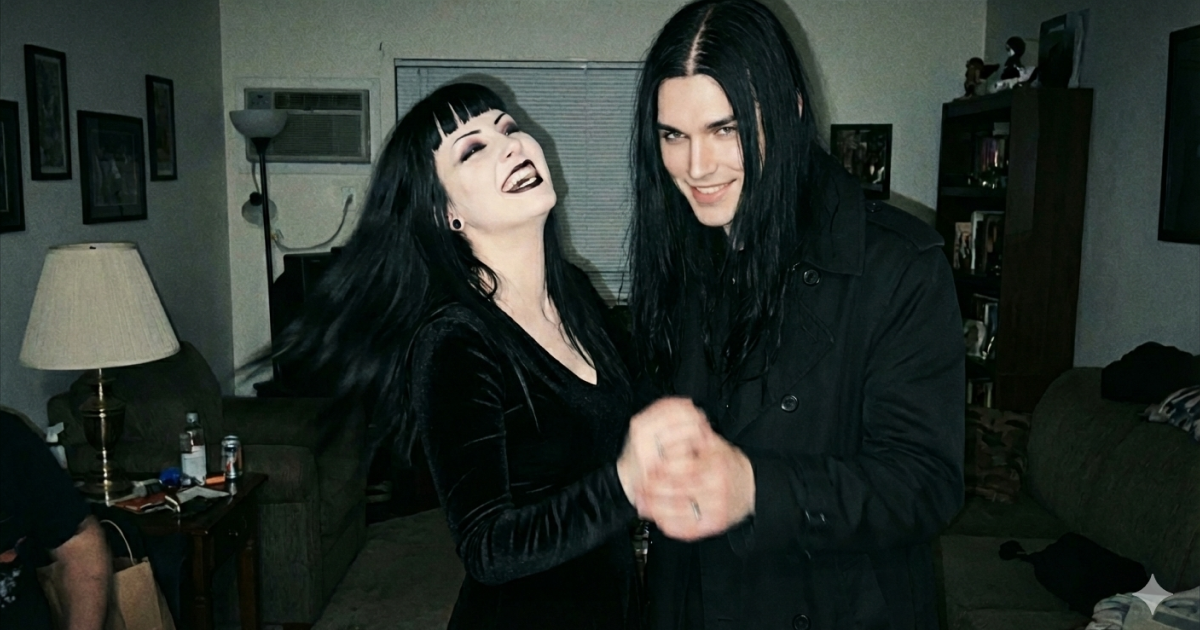
Goth vs. Emo: Shared Darkness, Different Meanings
Goths and emos may both gravitate toward darkness, but they approach it differently.
Goth culture finds beauty in mystery, romance, and shadow. Emo culture focuses on emotional honesty, vulnerability, and personal struggle. One is atmospheric and symbolic; the other is confessional and raw.
Understanding the difference isn't about ranking one above the other — it's about recognizing how deeply style, music, and identity are connected.
Looking for Your Place in the Dark?
Whether you identify as goth, emo, or somewhere in between, finding people who truly understand your aesthetic and mindset can be difficult on mainstream platforms.
DarkHeart is a dating app created specifically for goth, emo, punk, and alternative singles — a space where dark style, deep conversations, and authentic self-expression are the norm, not the exception.
If you’re tired of explaining your music taste, your fashion, or why darkness feels like home, DarkHeart connects you with people who already get it.
Your vibe. Your people. Your dark match.
Available on the App Store and Google Play.
Date your Darkness
Join thousands of goth singles on DarkHeart. Download the app and start connecting with people who share your dark aesthetic.